For Coaches, Consultants & Service-Based Experts
Your Audience Is Desperate to Buy From You. But Every Time You Open Your Mouth— You Talk Them Out of It.
The reason is simpler than you think. And once you see it, you'll wonder how you missed it.
4.9 / 5 from early readers
"People NEED this!"

Santana Vega
Public Speaking & Sales Coach
You're doing everything you've been told to do.
You're posting content. You've built a funnel. You're growing an email list. You're showing up consistently.
On paper… it looks like it should be working. But it isn't.
Because here's what the gurus won't tell you. The mechanics aren't the problem any more. They're no longer the advantage either.
Everyone has access to the same tools. The same strategies. The same templates. So now you're competing on execution in a market where execution has been completely commoditised.
But what makes it worse is your audience has never been more sceptical. They've been burned enough times that their default response to anything that looks like marketing is distrust.
You've been lied to.
Not maliciously. But deliberately enough that it's cost you real money.
The courses. The coaches. The $997 frameworks. The "7-figure" blueprint from someone whose main product is the blueprint. They handed you a map.
Speak to your audience. Understand their pain. Uncover their desires. Build trust. Add more value. Be clearer. Explain more.
But that map was always incomplete. Because it was never built on an understanding of how the human brain actually works.
Your audience wants to buy just as much as you want to sell. The desire is already there. It was there before they found you.
The only question is whether your communication unlocks it or triggers the one thing that shuts it down completely.
Because the human brain doesn't make decisions the way you've been taught to sell. It makes a subconscious decision, in milliseconds, based entirely on how your communication makes it feel.
I was just like you.
I bought into every one of those lies myself. I believed expertise was enough. I had the passion. I had the knowledge. I had the methodology. I was completely wrong about how business actually works.
For months I was trapped in what I now call the Expert's Echo Chamber. Impressing people who already knew what I knew, while remaining invisible to the people who desperately needed my help.
The calls went well. The prospects nodded. They told me it sounded brilliant. And then they disappeared.
If any of that resonates, you're not broken. The variable was never how good you are. It's something else underneath. And once you see it, you can't unsee it.
What two decades of brain-imaging research really revealed.
Advances in fMRI and EEG technology mean we can now watch in real time as a brain processes information and makes choices. What those studies show challenges almost everything traditional marketing teaches.
When presented with a buying decision, the brain doesn't carefully weigh pros and cons. Instead, the ancient decision-making part of the brain, the part responsible for survival and resource allocation, makes an instant assessment based on six specific elements.
Three of them act as gates. Fail any one and the brain defaults to "no" before conscious evaluation has even started. The other three amplify how hard the message hits once the gates are open.
This isn't theory. It's observable, measurable neuroscience that Fortune 500 companies already use to engineer predictable buying behaviour. The book takes that same science and translates it into something a single person with a laptop can actually apply.
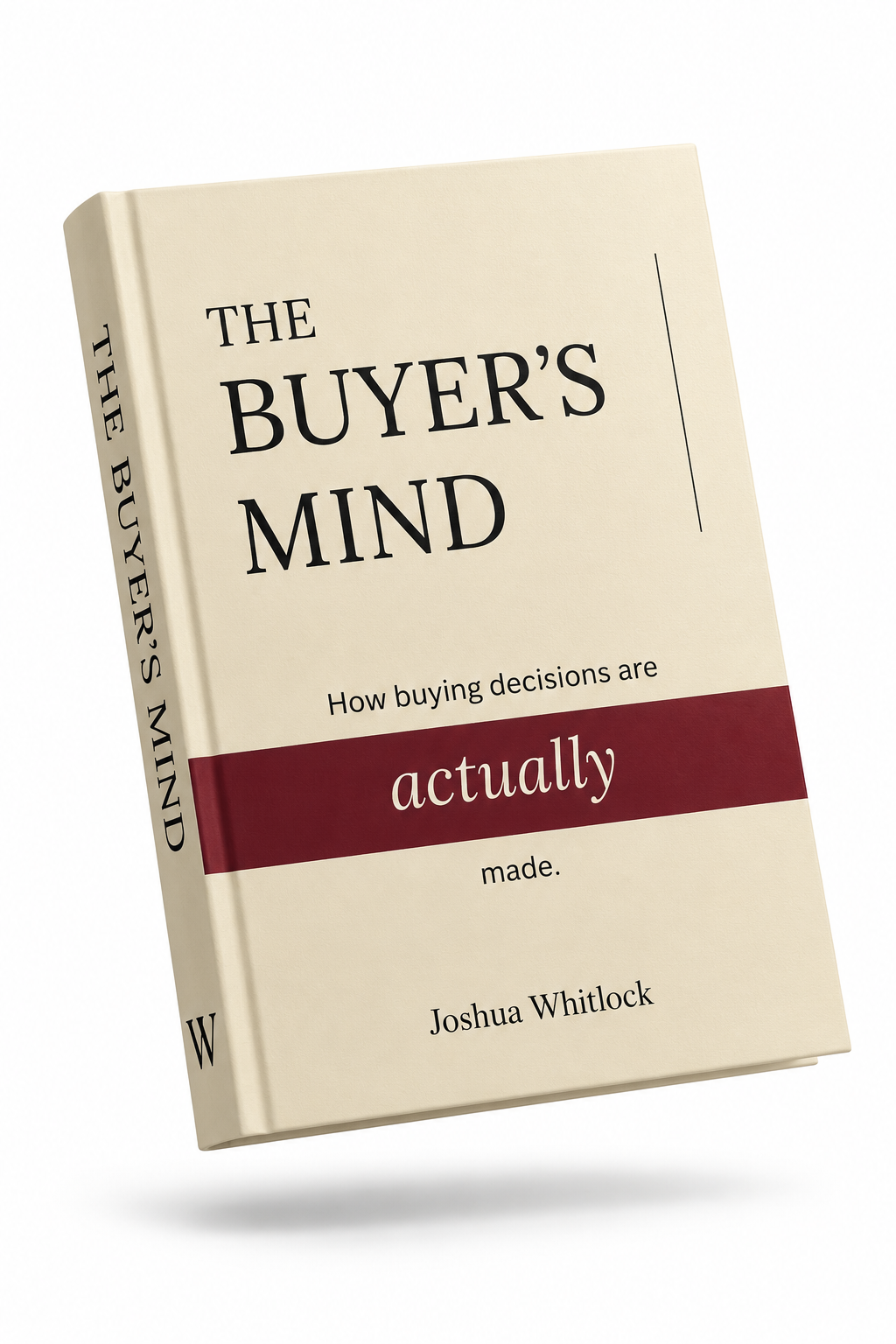
Introducing
The Buyer's Mind.
A field guide to The Buying Brain Blueprint™. The framework that translates cutting-edge neuroscience into a way of communicating that the decision brain actually responds to.
The Buying Brain Blueprint™
The six elements the decision brain is listening for.
When all six are present, prospects describe the experience as "irresistible clarity." The sense that you understand them perfectly and have exactly what they need.
Attention
Capturing focus through novelty or pain. The threshold every other element has to pass through first.
Me-Centricity
Speaking from the buyer's frame of reference rather than your own. The decision brain only listens when the subject is itself.
Emotional Triggers
Activating the primal drives (status, safety, loss, belonging, sexual selection) that actually move the buyer.
Contrast
Creating clear distinctions the brain can lock onto. Without contrast, no choice feels obvious.
Visual Processing
Engaging the visual cortex directly. The brain processes images thousands of times faster than text.
Tangible Outcomes
Concrete, measurable results. Abstractions reassure no one. Outcomes do.
Inside the book
What you'll come away with.
Why expertise was never the variable.
The pattern that catches almost every competent service provider. Years of skill produce no business growth, because the variable was never how good you are. The book opens by naming what the variable actually is, and why the entire industry has been pointing you at the wrong one.
The Expert's Echo Chamber.
Why your most carefully produced content gets engagement from other experts and ignored by the people who actually need your help. How to tell when you're in it, and the specific shift that gets you out.
The Permission Economy.
You do not have to create desire. Your audience is already spending money they don't have on things they don't need. The job is to position your work so the demand that already exists finds you.
The 1929 Easter Parade, and why it still matters.
Edward Bernays, the Torches of Freedom campaign, and the hundred-year-old mechanism running on every prospect you'll ever speak to. Why the platforms change and the mechanism doesn't.
"But I'm not the type of person who…"
The objection most service providers carry privately, and why it's structurally wrong. Sara Blakely was selling fax machines at twenty-seven. Nobody who built anything significant looked like they should have done when they started.
"But my situation is different…"
The most common reason readers put a book down and never use what's in it. Why niche size, audience wealth, platform changes, and market timing are not the conditions the framework actually depends on. Brené Brown built a category that didn't exist.
The architecture beneath every yes.
Kahneman's two-system model. Damasio's Iowa Gambling Task. The neurological reason logical explanations fail. Why the body responds before the hunch, the hunch arrives before the reason, and the reason is the last step in a decision that was already made.
The Buying Brain Blueprint™.
Six elements in two groups. Three gates that decide whether your message even gets processed (Attention, Me-Centricity, Emotion). Three enhancers that decide how hard it hits once it does (Contrast, Visual, Tangible). Why most marketing polishes the enhancers on a message whose gates are closed.
The four conditions of every yes.
The diagnostic that explains the most painful pattern in service marketing: posts that get engagement and offers that don't close. Problem felt, solution credible, action safe, timing right. Miss any one and the buyer stalls.
Find your one person. Write your one promise. Have your one conversation.
The three foundational moves that put the framework into practice. Choosing a real human instead of an archetype. The promise formula that turns a category description into a commitment. The three-phase structure (Connection, Discovery, Transition) of the conversation that converts.
Is this book for you?
Written for experienced coaches and consultants who deliver real results but struggle with consistent client attraction.
This is for you if:
- ✓Your work consistently delivers transformation, but your marketing doesn't reflect that.
- ✓You suspect what you say matters less than how the buyer's brain receives it.
- ✓You're tired of competing on tactics with people whose work isn't as good as yours.
- ✓You'd rather understand why something works than just be handed a script.
- ✓You're ready to change something at the root, not at the surface.
This is not for you if:
- ✗You expect results without implementing consistently.
- ✗You'd rather not learn how the brain actually makes buying decisions.
- ✗You prefer competing on price rather than value.
- ✗You want quick tricks instead of understanding the underlying principles.
Frequently asked questions.
Is this book only for business coaches?
The examples come from coaching because that's where the writing started. But the underlying principles apply to any transformation-based service. Health, relationships, consulting, therapy, creative direction. If your work changes how someone sees themselves, the Six Elements apply.
I'm new to decision science. Will this be too advanced?
No. The book starts with the underlying neuroscience in plain language and builds from there. Each chapter assumes you've read the previous one, not that you have a background in psychology.
Do I need a large budget to apply these ideas?
No. The Buying Brain Blueprint is a communication framework, not a media-spend framework. It works in DMs, in conversations, in a single email. Anywhere words land in front of a buyer.
I'm not naturally salesy. Will this work for me?
It tends to work better. The framework is built around how the buyer's brain already wants to be communicated with, which means less performance and less persuasion, not more.
How quickly can I expect to see results?
Readers typically report a noticeable shift in how prospects respond within 30 to 60 days of applying the framework consistently. The early shift is qualitative: fewer ghosted prospects, more clarity, before it shows up in revenue.
About the author
Joshua Whitlock.
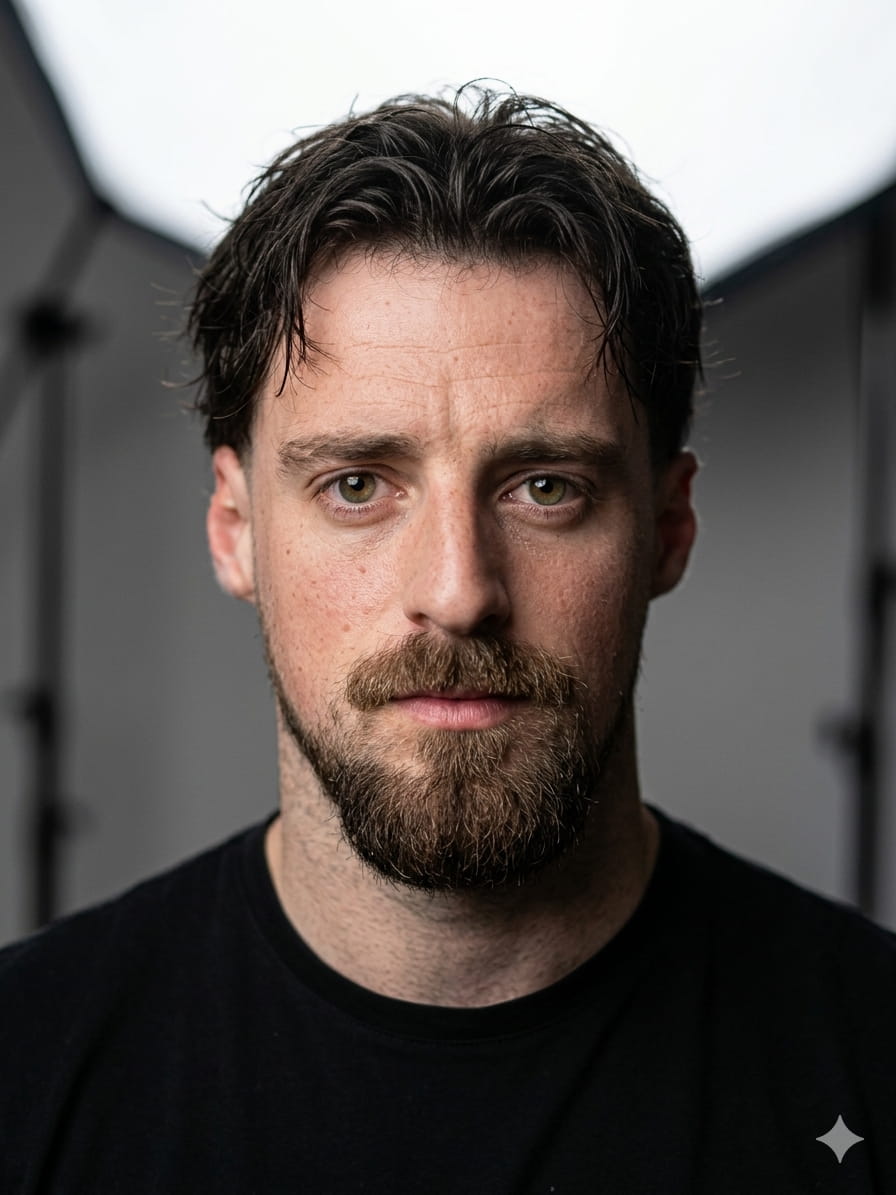
Joshua is a sales psychologist for coaches, consultants and service providers. The work draws on research from psychology, behavioural economics and neuroscience, applied to how experts actually sell. Their copy, their content, their offers, their conversations.
The personal track record sits behind the methodology. Over $1M in personal sales after his first online business stalled and he rebuilt it on the underlying mechanics rather than the surface tactics. Then four years directing sales and marketing for Ben Patrick (Knees Over Toes Guy), during a stretch when the business was running at seven figures a month.
What both numbers confirmed is the same thing. A smaller audience with the right communication outsells a larger audience with the wrong one. Reliably. The Buyer's Mind is the book version of how.
The next conversation you have could end with a yes.
You have the expertise. You have the results. The only thing standing between where you are and the business you know you're capable of is the gap between what you know and how you're communicating it. The book is a way to close that gap.