About
Hi, I'm Joshua Whitlock.
I'm a sales psychologist. I help coaches, consultants, and service providers turn attention into revenue by communicating in the way the decision-making brain actually responds to.
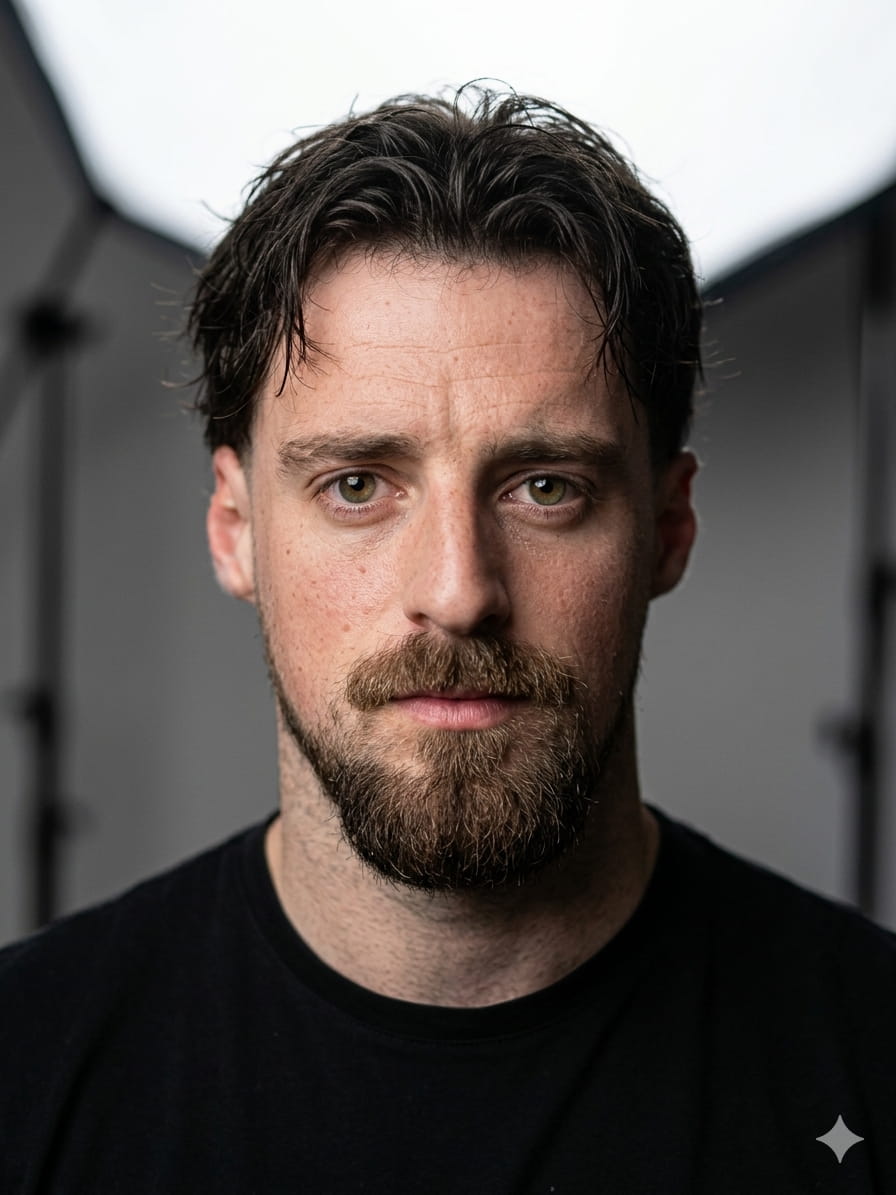
I'm the founder of Science of Selling. The work draws on research from psychology, behavioural economics, and neuroscience, applied to how coaches, consultants, and service providers actually sell — their copy, their content, their offers, their conversations.
The personal track record sits behind the methodology. $1M+ in personal sales after my first online business stalled and I rebuilt it on the underlying mechanics rather than the surface tactics. Then Head Director of Sales & Marketing for Ben Patrick (Kneesovertoesguy), where the same system did $1.5M+ per month against an audience that was already there.
What both numbers confirmed is the same thing. A smaller audience with the right communication outsells a larger audience with the wrong one. Reliably. Everything on this site is downstream of that.
$1M+
Personal sales
Personal track record after rebuilding on the underlying mechanics rather than surface tactics.
$1.5M+/mo
Revenue at Kneesovertoesguy
As Head Director of Sales & Marketing for Ben Patrick (Kneesovertoesguy), the same system ran the brand at scale.
The discipline
What sales psychology actually is.
The phrase "science of selling" gets used loosely. Most of the time, what people mean by it is a recycled set of closing techniques dressed up in a lab coat. That isn't science. That's tactics with a costume change.
Sales psychology is the discipline of taking the actual research seriously and translating it into communication. Not as a set of hacks. As a working model of how the buying brain processes a message, evaluates a seller, and arrives at a decision.
The lineage is older than the marketing industry. Edward Bernays was applying Freud's work on unconscious drives to mass communication in the 1920s. He gets a difficult reputation, and some of it was earned by what those ideas got pointed at. The underlying principle, though, doesn't stop being correct because of who has misused it: human beings carry deep evolutionary impulses toward pleasure and away from pain, those impulses run far below conscious awareness, and any communication that doesn't account for them is operating on the wrong layer of the brain. The next century of research has done little except confirm and refine that picture. Kahneman and Tversky's prospect theory. Damasio's somatic marker hypothesis. The entire dual-process and decision-neuroscience literature.
The premise underneath the discipline is universality. The human brain hasn't changed in any commercially relevant way for fifty thousand years. Two people in different markets, different cultures, different income brackets are running broadly the same decision-making hardware. Once you understand how that hardware works, projections about what will and won't move a buyer become unusually accurate — not as a matter of intuition or experience, but as a matter of mechanism.
That's the part most marketing leaves on the table. Not the tactics. The mechanism.
The failure modes
What the industry gets wrong.
Three patterns show up across almost every expert who has the audience but not the conversion.
01
Selling rationally to a non-rational brain
Features, benefits, logical advantages, comparison tables — these address the conscious mind, which doesn't make the buying decision. The conscious mind is too slow. The actual yes-or-no is processed pre-consciously by older, faster structures (the amygdala leading, the neocortex following) and dressed in rational language afterward. Information-overloaded markets compound the problem. More rational input produces more cognitive load, more distrust, lower acceptance.
02
Treating "salesy" as a feeling problem
Sellers who feel salesy usually aren't doing anything wrong ethically. They're using language that triggers System 1 threat responses in the buyer (pressure cues, hedge words, manufactured urgency) and feeling the social discomfort of being received that way. The fix isn't more confidence. It's better mechanics.
03
Mistaking expertise for persuasion
Deep knowledge is a System 2 asset; the buying decision happens in System 1. The deeper the expertise, the more sellers default to feature-led, credential-heavy, defensive language, which reads as cognitive load and uncertainty to the buyer even when the seller is technically right. Knowing more doesn't sell more. Translating what you know into the buyer's decision-making register does.
The methodology
How the work works.
Every piece of this work starts with the buyer's decision brain.
The premise: decisions aren't made by the conscious mind. The conscious mind is too slow, and most of what it produces in a buying context is post-hoc justification. The actual decision happens pre-cognitively, on older structures evolved to process survival-grade questions in milliseconds (is this safe, is this useful, is this urgent), and then hands the verdict to the conscious mind to dress in language. The neocortex serves the amygdala, not the other way around.
What people assume
linear · slow · conscious
What actually happens
instant · pre-conscious · emotional
That changes what selling means in practice. The job isn't to convince the conscious mind through logic. The job is to deliver information to the decision brain in the language it actually reads: immediacy, perceived value, low cognitive load, emotional weight, survival relevance. When the decision brain processes a message in those terms, acceptance rises sharply. When it doesn't, no amount of logical argument compensates.
The principles run across every layer of how a service business communicates: long-form content that builds awareness, conversations that surface the real problem, offers that turn intent into commitment, copy that holds the page together when the seller isn't in the room. The application changes layer to layer. The mechanism doesn't.
A note on ethics. Decision science applied to marketing is not about engineering people into buying things they don't want. It's about removing the friction between someone who would benefit from the work and the decision to commit to it. Most of that friction sits in communication pitched to the wrong layer of the brain. Fix the communication and the seller stops needing to push — the buyer arrives on their own, and what was a vague want becomes a clear need.
That's what makes the work durable. Tactics expire when platforms change. Hooks lose their edge when audiences see them too many times. The mechanism underneath outlasts every platform and every trend, because the human brain is the one variable that hasn't moved in fifty thousand years.
Position
I'm not a coach.
The market for coaches who help coaches is the most saturated category in the entire expertise economy. Going head-to-head with another thousand people who call themselves the same thing, in the same way, with the same offers, is a slow loss disguised as a strategy.
The discipline I work in is sales psychology. The audience is coaches, consultants, and service providers. The work itself sits closer to research-led behavioural science than to coaching in the traditional sense. The V Principle of positioning is that the only durable place to stand in a crowded market is to diverge from it: to do something different in name and substance rather than slightly better in the same lane.
So I name the work what it is. Sales psychologist. Personal brand strategist. The work of understanding why people buy and engineering messages so they can do that easily, on their own terms, without manipulation.
Who this is for
Real expertise, unrealised conversion.
The work is for coaches, consultants, and service providers who already have the expertise and the audience, and want both to start producing results that match.
The specific groups that show up most are relationship coaches and marriage counsellors, therapists and mental health professionals, fitness coaches, somatic and intimacy coaches, and adjacent businesses where the seller is the product. The pattern across all of them: the expertise is real, the audience is real, the conversion rate is below where the expertise actually warrants.
The shared problem is a skills gap rather than a knowledge gap. They know their field, having spent years getting good at it. What they have not had time for is learning how the people they want to help actually decide. The buying decision sits in a different cognitive register than the work itself, and most experts have never been taught to translate between the two.
If that sounds like you, the rest of this site is built for you.
How to work with me
Three ways in.
There are three ways to work with me, depending on how much of the work you want to do yourself.
DIY: Learn and apply
A community of coaches, consultants, and service providers learning the work and applying it inside their businesses. Course library, regular live calls, and direct group access. The right place if you are early in the journey, self-sufficient, and ready to build the skill yourself.
DWY: Guided transformation
Direct 1-1 work for people who already have results and want to develop the skill personally with someone who has already done it. Six-month minimum, designed for the kind of depth that does not happen in a single session.
DFY: Full implementation
I come in as a fractional CMO. Funnels, copy, websites, ads, sales systems built and maintained around your business, your voice, and your audience. The right level when your time is the most valuable thing in the business.
The right level depends on time, ambition, and how embedded the bottleneck is. The full breakdown of each level (what is included, the engagement structure, the kind of result it is built for) lives on the services page. The discovery call is the fastest way to figure out which one fits.
Where else to find me
I publish across a few channels.
Want to see this applied to your business?
One conversation is enough to map where your communication is leaking conversion and to prescribe what to change first.
Book Your Call